

If you’re selling on Amazon, you know how crucial it is to stay competitive with pricing. The right repricer can help you automate this process and save a ton of time. But with so many options out there, it can be overwhelming to find the best repricer for Amazon. This article breaks down what to look for in a repricer, highlights some popular choices, and offers tips on how to choose the right one for your business.
Key Takeaways
- Look for real-time repricing to stay competitive.
- Customization options are key for tailoring strategies to your needs.
- Consider competitor analysis tools to understand market dynamics.
- Free trials can help you test a repricer before committing to a plan.
- Avoid common mistakes like ignoring competitor pricing and subscription costs.
Top Features To Look For In A Repricer
When you’re trying to pick the best repricer for your Amazon business, it’s easy to get lost in all the marketing hype. They all claim to be the fastest, the smartest, and the most likely to win you the Buy Box. But what features really matter? Here’s what I think you should focus on:
Real-Time Repricing Capabilities
This is non-negotiable. In the fast-paced world of Amazon, prices can change in seconds. A repricer that only updates every 15 minutes is basically useless. You need a tool that reacts instantly to competitor changes, ensuring you’re always offering a competitive price. The faster the repricer, the better your chances of capturing sales and maintaining a competitive edge.
Customizable Pricing Strategies
One-size-fits-all doesn’t work when it comes to pricing. You need a repricer that lets you create custom rules based on different scenarios. For example:
- Competitor Type: You might want to compete aggressively against sellers with low ratings but maintain a higher price against those with excellent feedback.
- Inventory Levels: As your stock dwindles, you might want to gradually increase prices to maximize profit.
- Buy Box Status: You might want to lower your price to win the Buy Box or increase it slightly once you have it.
A good repricer should give you granular control over your pricing strategies, allowing you to adapt to changing market conditions and achieve your specific business goals.
Competitor Analysis Tools
It’s not enough to just react to competitor prices; you need to understand why they’re pricing the way they are. A good repricer will offer tools to analyze your competitors, providing insights into their:
- Pricing History: How often do they change their prices, and by how much?
- Inventory Levels: Are they about to run out of stock, creating an opportunity for you to raise your prices?
- Seller Metrics: What are their ratings, feedback scores, and shipping times? Knowing this helps you assess how aggressively you need to compete against them.
Best Repricer For Amazon Sellers

Alright, let’s talk about some of the popular repricers out there for Amazon sellers. There are a bunch of options, and each one has its own strengths and weaknesses. Finding the Best Repricer For Amazon really depends on what you need and what you’re looking for in a tool.
Aura: AI-Powered Repricing
Aura is known for its AI-powered repricing capabilities. It’s designed to help sellers win the Buy Box more often by using smart algorithms to adjust prices. The main thing that sets Aura apart is its focus on artificial intelligence to make pricing decisions. It analyzes a ton of data points to figure out the optimal price, which can save you a lot of time and effort.
RepricerExpress: Comprehensive Features
RepricerExpress is a popular choice because it offers a wide range of features. It’s designed to be a comprehensive solution for Amazon sellers who want a lot of control over their repricing strategies. RepricerExpress monitors competitors and gives you insights into their pricing strategies. For example, if it’s not too difficult for you to win the Buy Box, RepricerExpress will increase your prices little by little so that you can yield more profit. Here’s a quick look at their subscription plans:
- Express: £64 per month (up to 5,000 listings)
- Plus: £189 per month (up to 50,000 listings)
- Ultimate: £319 per month (up to 250,000 listings)
- Extreme: £949 per month (up to 1 million listings)
They also offer a 14-day free trial, so you can give it a shot before committing.
BQool: User-Friendly Interface
BQool is another Amazon repricing tool that leverages AI to maximize repricing benefits and the time spent in the Buy Box. What makes BQool stand out is its user-friendly interface. It’s designed to be easy to use, even if you’re not a tech expert. BQool offers three repricing tools:
- Conditional Repricer
- Flash Repricer
- Smart Repricer
Choosing the right repricer is a big decision. Take your time, do your research, and pick the one that fits your business needs the best. Don’t rush into it!
Understanding Subscription Plans
Choosing the right repricer isn’t just about features; it’s also about understanding the subscription plans and how they fit your business. Repricer pricing can vary wildly, so it’s important to do your homework.
Pricing Tiers Explained
Repricer subscription plans usually come in tiers, often based on the number of SKUs you need to manage. The more SKUs, the higher the price. Some repricers also offer different features depending on the tier. For example, a basic plan might offer basic repricing, while a higher-tier plan includes AI-powered repricing or more advanced analytics. It’s important to carefully evaluate what you need and what you’re actually getting for the price. Some, like Seller Champ, offer dynamic repricing.
Here’s a simplified example of how pricing tiers might look:
| Tier | SKUs | Features | Price |
| Basic | Up to 1,000 | Basic Repricing, Competitor Monitoring | $49/month |
| Standard | Up to 5,000 | AI Repricing, Advanced Analytics | $99/month |
| Premium | Up to 25,000 | Instant Repricing, Dedicated Support | $199/month |
Free Trials and Money-Back Guarantees
Before committing to a subscription, take advantage of free trials. Many repricers offer a trial period, usually 14 to 30 days, allowing you to test the software and see if it meets your needs. This is a great way to ensure the repricer integrates well with your Amazon business before you pay. Also, check for money-back guarantees. If you’re not satisfied with the repricer within a certain period, a money-back guarantee can provide some peace of mind.
Cost-Effectiveness for Different Seller Sizes
The cost-effectiveness of a repricer depends heavily on your seller size and business model. A small seller with a few hundred SKUs might find a basic plan sufficient, while a larger seller with thousands of SKUs will need a more robust plan. Consider your sales volume, profit margins, and the potential impact of repricing on your bottom line. Some repricers, like Sellery, even use a percentage-based model.
Don’t just look at the monthly price tag. Factor in the potential increase in sales and profits that the repricer can generate. A more expensive repricer might be worth it if it significantly boosts your sales and helps you win the Buy Box more often.
It’s also worth noting that some repricers offer customized plans for enterprise-level sellers with very large inventories or specific needs. Don’t be afraid to contact the repricer and discuss your requirements to see if they can offer a tailored solution.
Benefits Of Using A Repricer

Time Savings and Efficiency
Let’s be real, manually adjusting prices on Amazon is a huge time sink. An Amazon repricing toolAmazon repricing tool automates this process, freeing up your time to focus on other important aspects of your business, like sourcing new products or improving your marketing. Think of it as hiring a tireless pricing assistant who never sleeps. You can set your rules, and the repricer does the rest. No more constant monitoring of competitor prices – it’s all handled for you.
Increased Profit Margins
Repricing isn’t just about being the cheapest; it’s about finding the optimal price that maximizes your profit. A good repricer can help you achieve this by:
- Dynamically adjusting prices based on competitor actions.
- Taking into account factors like shipping costs and fulfillment methods.
- Identifying opportunities to increase prices when demand is high or competition is low.
By strategically adjusting your prices, you can capture more sales at higher margins, leading to a significant boost in your overall profitability.
Enhanced Competitive Edge
In the fast-paced world of Amazon, staying competitive is crucial. A repricer gives you an edge by:
- Reacting quickly to price changes from competitors.
- Helping you win the Buy Box more often.
- Allowing you to tailor your pricing strategy to specific products and situations.
With a repricer, you can confidently compete with other sellers and capture a larger share of the market.
How To Choose The Right Repricer
Choosing the right repricer for your Amazon business can feel overwhelming. There are so many options, each promising to boost your sales and profits. But how do you cut through the noise and find the one that truly fits your needs? It’s about more than just picking the cheapest option; it’s about finding a tool that aligns with your business goals and offers the features you need to succeed. Let’s explore some key considerations.
Assessing Your Business Needs
Before you even start looking at repricers, take a good, hard look at your business. What are your current sales volumes? How many products do you sell? What are your profit margins like? Understanding these basics will help you determine what features are essential for you. For example, a seller with a small inventory might not need all the bells and whistles of a high-end repricer, while a large-scale operation will definitely need advanced features. Consider your comfort level with technology too. Are you tech-savvy, or do you prefer a more user-friendly interface? The answers to these questions will guide your search.
Evaluating Repricing Speed
In the fast-paced world of Amazon, repricing speed is critical. A slow repricer can mean lost sales and missed opportunities. Ideally, you want a tool that can react to competitor price changes in real-time, or near real-time. Some repricers offer instant repricing, while others update prices every 15 minutes or longer. The faster the repricing speed, the more competitive you can be. However, keep in mind that faster repricing often comes at a higher cost. You need to weigh the benefits of speed against your budget. It’s also worth checking if the vendor charges extra for continuous repricing.
Customization and Control Options
One size doesn’t fit all when it comes to repricing strategies. You need a repricer that allows you to customize your pricing rules and strategies to fit your specific needs. Look for a tool that offers a high level of customization, allowing you to set minimum and maximum prices, target specific competitors, and adjust your strategy based on various factors, such as competitor stock levels or seller ratings. The more control you have over your repricing, the better you can optimize your profits and stay ahead of the competition. You should be able to select the seller you want to compete with and the parameters you want to predefine.
Choosing the right repricer is a big decision. Take your time and choose wisely. Don’t rush into a decision based solely on price or flashy marketing. Do your research, read reviews, and take advantage of free trials to find the tool that truly fits your business needs.
Common Mistakes To Avoid With Repricers
It’s easy to get excited about using a repricer, but there are definitely some pitfalls to watch out for. Let’s look at some common mistakes people make so you can avoid them.
Ignoring Competitor Pricing
One of the biggest mistakes is not paying close enough attention to what your competitors are doing. A repricer is only as good as the data it uses, and if you’re not accurately tracking your competition, you could be leaving money on the table or, worse, pricing yourself out of the market. You need to understand who your real competitors are and what their pricing strategies look like. Are they trying to undercut everyone, or are they focused on maintaining a certain profit margin? Without this information, your repricer might be making decisions that don’t make sense in the real world. It’s important to remember that Amazon reselling requires constant vigilance.
Overlooking Subscription Costs
Repricers come with subscription fees, and it’s easy to focus on the potential profit gains while forgetting to factor in these costs. Some repricers have tiered pricing, and you might find yourself paying for features you don’t even need. Make sure you understand the pricing structure and choose a plan that aligns with your business size and sales volume. Don’t just assume the cheapest option is the best; it might lack features that are essential for your success. Consider these points:
- What is the monthly fee?
- Are there any hidden charges?
- Does the price scale with the number of listings?
Neglecting Performance Analytics
Once your repricer is up and running, it’s crucial to monitor its performance. Are you actually seeing an increase in sales and profit margins? Or is your repricer just driving prices down without any real benefit? Most repricers offer analytics dashboards that can provide valuable insights into your pricing strategy. Pay attention to these metrics and be willing to adjust your settings as needed. Don’t just set it and forget it; a repricer requires ongoing monitoring and optimization. It’s almost impossible to determine which is the best repricer without analytics.
Integrating Repricers With Your Amazon Strategy
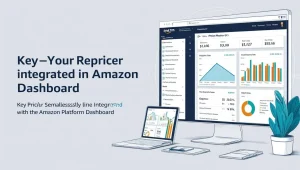
Repricers aren’t just standalone tools; they’re integral components of a broader Amazon selling strategy. It’s about making them work harmoniously with your overall business goals.
Aligning Repricing With Sales Goals
Your repricing strategy should directly support your sales objectives. Are you aiming for high volume, maximum profit per unit, or rapid inventory turnover? The repricer’s settings must reflect these priorities. For example, if your goal is to quickly clear out old stock, a more aggressive, price-cutting strategy is appropriate. Conversely, if you’re focused on profitability, you might set higher minimum prices and compete less aggressively.
Using Data Analytics for Better Decisions
Repricers generate a wealth of data. Don’t let it go to waste! Analyze the performance of your repricing rules. Which strategies lead to the most sales? Which ones maximize profit margins? Use this information to refine your approach. For instance, you might discover that a particular rule works well for certain product categories but not others. Adjust accordingly. Understanding Amazon’s repricing strategies is key to making informed decisions.
Monitoring Performance and Adjusting Strategies
Amazon’s marketplace is dynamic. Competitors change, demand fluctuates, and new products enter the market. A repricing strategy that worked last month might not be effective today. Regularly monitor your repricer’s performance and be prepared to make adjustments. This includes:
- Tracking key metrics like sales volume, profit margins, and Buy Box percentage.
- Analyzing competitor behavior and adapting your rules accordingly.
- Staying informed about changes to Amazon’s policies and algorithms.
Think of your repricer as a living, breathing part of your business. It requires constant attention and fine-tuning to stay ahead of the curve. Don’t set it and forget it. Regularly review its performance and make adjustments as needed to ensure it continues to support your overall Amazon strategy.
Wrapping It Up
Choosing the right repricer for your Amazon business is a big deal. You’ve got to think about what fits your needs best. Each tool has its own strengths and weaknesses, so take your time to weigh your options. Whether you need something simple or a more advanced solution, there’s a repricer out there for you. Don’t rush the decision—pick one that aligns with your selling strategy and goals. Happy selling!
Frequently Asked Questions
What is a repricer for Amazon?
A repricer is a tool that automatically changes the prices of your products on Amazon. It helps sellers keep their prices competitive without having to do it manually.
Why should I use a repricer?
Using a repricer saves you time and helps you make more money. It adjusts your prices based on what your competitors are doing, so you can win more sales.
How do I choose the best repricer?
Look for a repricer that fits your needs. Think about how fast it updates prices, how much control you have over pricing rules, and if it offers good support.
Are there any free repricers available?
Yes, many repricers offer free trials. This lets you test them out before deciding to pay for a subscription.
Can a repricer help me win the Buy Box?
Yes, a good repricer can help you win the Buy Box by adjusting your prices to be more competitive with other sellers.
What mistakes should I avoid when using a repricer?
Avoid ignoring your competitors’ prices, not checking subscription costs, and not analyzing how well your repricer is performing.


