

When shopping on Amazon, you might have noticed two badges that pop up on product listings: Amazon’s Choice and Best Seller. While both can signal quality and popularity, they represent different things. Understanding the differences between these badges can help you make better buying decisions or improve your selling strategies if you’re a seller. So, let’s break down what each badge means and which one might be more beneficial for you.
Key Takeaways
- Amazon’s Choice highlights quality and relevance to search terms, while Best Seller focuses on sales volume.
- Achieving Amazon’s Choice requires high ratings and low return rates, whereas Best Seller is about ranking by sales.
- Both badges can enhance visibility and credibility for products, but they serve different purposes in marketing.
- Strategies for obtaining Amazon’s Choice include optimizing listings and managing inventory effectively.
- Maximizing the Best Seller badge involves consistent sales, effective marketing, and maintaining customer satisfaction.
Understanding Amazon’s Choice Badge

Definition and Purpose
The Amazon’s Choice badge is basically Amazon’s way of saying, “Hey, this is a pretty good product for what you’re searching for.” It’s like a digital thumbs-up from Amazon itself. The main goal of this badge is to simplify the buying process for customers, especially those using Alexa voice search. Imagine asking Alexa for “laundry detergent” and it recommends an Amazon’s Choice product – easy, right? The badge aims to highlight products that are high-quality, readily available, and competitively priced. It helps customers quickly identify reliable options, saving them time and effort. Amazon introduced the Amazon badge to provide important and reliable product results for potential buyers and boost sellers’ sales volume and brand recognition.
Criteria for Selection
So, how does a product actually earn the Amazon’s Choice badge? Well, Amazon keeps the exact formula a secret, but we know a few key ingredients. Here’s a breakdown:
- Relevance is super important. The product needs to be a close match for the search term. If someone searches for “dog leash,” the Amazon’s Choice product should definitely be a dog leash, not a cat toy.
- Availability matters. Amazon prefers products that are in stock and ready to ship ASAP. Think Amazon FBA or Prime – those products often have an edge.
- Good reviews are a must. Amazon wants to recommend products that customers actually like, so a high star rating (think 4 stars or higher) is crucial.
- Low return rates are also important. If lots of people are returning a product, that’s a red flag for Amazon.
- Competitive pricing helps. It doesn’t have to be the cheapest, but it should offer good value for the money.
It’s worth noting that the Amazon’s Choice badge isn’t set in stone. It can change depending on product performance and customer behavior. So, even if you get the badge, you need to keep working to maintain it.
Impact on Sales
Getting the Amazon’s Choice badge can seriously boost your sales. According to some studies, products with the badge get way more traffic than those without it. It makes sense – the badge acts as a signal of trust and quality. People are more likely to click on and buy a product that Amazon recommends. Plus, the badge can improve your product’s visibility in search results, leading to even more potential customers. It’s like getting a positive rating and reviews that can significantly improve your chances of receiving the badge. Amazon wants to ensure that its Choice is well regarded by actual users.
Exploring the Best Seller Badge

What It Represents
The Best Seller badge on Amazon is a signal of strong sales performance within a specific product category. It’s that little orange ribbon you see on a listing, and it means the product is selling well. It’s not just about total sales, but also recent sales trends. Amazon looks at how quickly a product is selling compared to others in the same category. The Best Seller Rank (BSR) is assigned to every product, and it’s updated hourly. The lower the BSR, the better the rank. It used to be only one product per category got the badge, but now Amazon awards it to the top 100 in most categories. This helps customers quickly identify popular items.
How It Is Determined
Amazon’s algorithm calculates the Best Seller Rank based on a few key factors. It’s not just about total sales volume, but also the speed at which products are selling. Here’s a breakdown:
- Recent Sales: How many units have been sold recently.
- Sales History: The overall sales performance of the product over time.
- Category Performance: How well the product sells within its specific category.
Getting the Best Seller badge isn’t easy. It requires a combination of a great product, effective marketing, and consistent sales. It’s a dynamic process, so maintaining the badge requires ongoing effort.
Benefits for Sellers
Earning the Best Seller badge can significantly boost a seller’s visibility and sales. It acts as a form of social proof, signaling to customers that the product is popular and well-regarded. Here are some key benefits:
- Increased visibility in search results.
- Higher click-through rates on product listings.
- Improved conversion rates, leading to more sales.
Having the Amazon Renewed program can also help boost sales.
Key Differences Between Amazon’s Choice and Best Seller
Focus on Quality vs. Sales Volume
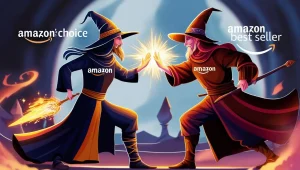
The core difference lies in what each badge prioritizes.Amazon’s Choice is heavily influenced by product quality, availability, and customer satisfaction for a specific keyword. The Best Seller badge, on the other hand, is primarily about sales volume within a particular category. Think of it this way: Amazon’s Choice is like a recommendation based on overall goodness, while Best Seller is simply a popularity contest.
Selection Criteria
Amazon’s Choice takes into account several factors:
- High click-through and conversion rates for relevant search terms.
- Immediate availability (Prime eligibility is a big plus).
- Solid customer reviews (aim for at least 4 stars).
- Low return rates (signals good product quality).
Best Seller is more straightforward. It’s all about:
- Sales data within a category (updated hourly).
- Historical sales performance.
- Current sales velocity.
Visibility and Trust
Both badges boost visibility, but in different ways. Amazon’s Choice often appears for specific search terms, guiding customers who are looking for a particular product. The Best Seller badge is displayed on the product page and in category listings, attracting customers browsing for top-selling items. Both badges build trust, but Amazon’s Choice might carry a bit more weight as an explicit endorsement from Amazon. To ship inventory to Amazon, you’ll want to ensure your products are high-quality and likely to become an Amazon’s Choice product.
While both badges are desirable, understanding their differences allows sellers to tailor their strategies effectively. The amazon’s choice vs best seller debate really boils down to focusing on specific keywords versus dominating a product category.
Strategies to Achieve Amazon’s Choice Status
Definition and Purpose
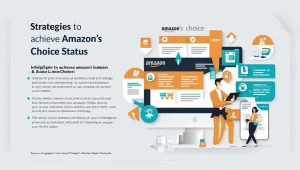
Okay, so you want that sweet, sweet “Amazon’s Choice” badge? It’s not just about luck; it’s about playing the Amazon game right. The Amazon’s Choice badge is basically Amazon saying, “Hey, this is a good product, and we recommend it.” It’s designed to help customers quickly find well-rated, readily available products that they’re likely to be happy with. It’s all about convenience and trust.
Criteria for Selection
So, how do you actually get the Amazon’s Choice badge? It’s a mix of things, but here’s the gist:
- High Ratings and Reviews: People need to like your product. A lot. Think 4-star average or better.
- Fast Shipping: Prime eligibility is almost a must. People want their stuff, and they want it now.
- Low Return Rate: If people are sending your product back, Amazon isn’t going to be thrilled.
- Availability: You gotta have it in stock. Nothing’s worse than a customer trying to buy something that’s out of stock.
- Relevance: Your product needs to be a good match for the search term. If someone searches for “dog leash,” your dog leash better be a top contender.
Getting the Amazon’s Choice badge is like getting a gold star from Amazon itself. It tells customers that your product is a safe bet, which can seriously boost your sales.
Impact on Sales
Does the Amazon’s Choice badge actually matter? Absolutely. It can seriously boost your sales. Here’s why:
- Increased Visibility: Products with the badge tend to show up higher in search results.
- Higher Click-Through Rate: People are more likely to click on a product with the badge.
- Improved Conversion Rate: Once they’re on your product page, they’re more likely to buy.
Basically, it’s free advertising from Amazon. And who doesn’t want that?
Maximizing the Best Seller Badge
Sales Strategies
To really make the most of the Best Seller badge, you’ve got to have a solid sales strategy. One effective method is to temporarily lower your prices, even setting up a Lightning Deal if possible. Remember, though, Lightning Deals require at least a 4-star rating and Amazon Prime eligibility. Decide beforehand how many units you’re willing to sell at the discounted rate, and keep a close eye on your sales to avoid going over that number. Another tactic is to offer discounts through Facebook. Promo codes can be super effective for boosting sales. Start with a lower discount percentage and increase it if the initial response is good. You can also adjust the number of units sold per day based on how things are going. These strategies are all about getting that #1 Best Seller badge, but what happens after you get it? How do you keep it?
Marketing Techniques
Once you’ve got the Best Seller badge, it’s time to ramp up your marketing efforts. Think about running targeted ad campaigns on Amazon and other platforms to drive even more traffic to your product listing. Use eye-catching visuals and compelling copy that highlights the benefits of your product and the fact that it’s a best seller. Don’t forget to use social media to your advantage. Share customer testimonials, run contests, and engage with your audience to build a loyal following. Consider working with influencers in your niche to promote your product to their followers. This can be a great way to reach a wider audience and build credibility. Also, make sure your product listings are fully optimized with relevant keywords and high-quality images. This will help you attract more organic traffic and improve your conversion rate.
Maintaining Sales Momentum
Keeping that Best Seller badge is all about maintaining sales momentum. The very first thing to do is stock up. You’ll be selling a large number of units, first as discounts and later when your sales boost after becoming a Bestseller. Continuously monitor your sales and inventory levels to make sure you don’t run out of stock. Nothing kills momentum faster than not being able to fulfill orders. Keep an eye on your competition and adjust your pricing and marketing strategies as needed to stay ahead of the game. Also, pay close attention to customer feedback and reviews. Address any negative reviews promptly and use the feedback to improve your product and customer experience. Consider implementing a customer loyalty program to reward repeat customers and encourage them to keep buying from you. Finally, don’t be afraid to experiment with new products and strategies to keep things fresh and exciting for your customers.
Remember, the Best Seller badge is a reflection of your product’s performance in Amazon sales. By focusing on sales strategies, marketing techniques, and maintaining sales momentum, you can maximize the benefits of this badge and drive even more success for your business.
Consumer Perception of Amazon’s Choice and Best Seller
Trust and Credibility
When shoppers see either the “Amazon’s Choice” or “Best Seller” badge, it definitely makes an impression. The “Amazon’s Choice” badge often signals quality and suitability for a specific need, as it’s tied to particular search terms. People tend to think, “Okay, Amazon recommends this for what I’m looking for.” The “Best Seller” badge, on the other hand, screams popularity. It’s like saying, “Hey, tons of people are buying this!” Both badges can boost a product’s credibility, but in slightly different ways.
Influence on Buying Decisions
These badges can seriously sway what people buy. If someone is on the fence about two similar products, seeing one with a badge might be the deciding factor. It’s a form of social proof. People think, “If it’s a best seller, it must be good, right?” Or, “If Amazon chose it, it probably meets my needs well.” It’s not a guarantee of satisfaction, but it definitely nudges people toward certain products. To understand the idea better, consider how these badges simplify the decision-making process for consumers overwhelmed by choices.
Comparative Value
So, which badge is “better” in the eyes of the consumer? It depends. Some shoppers might prioritize the “Amazon’s Choice” badge, believing it indicates a product that Amazon has vetted for quality and relevance. Others might be more drawn to the “Best Seller” badge, seeing it as a sign of popularity and widespread satisfaction. There’s no one-size-fits-all answer. It really comes down to individual preferences and what they value most in a product.
Ultimately, both badges add value, but in different ways. “Amazon’s Choice” implies a recommendation, while “Best Seller” suggests popularity. Savvy shoppers might consider both, along with reviews and other factors, before making a final decision.
Here’s a quick comparison:
| Feature | Amazon’s Choice | Best Seller |
| Primary Focus | Quality, relevance to specific search terms | Sales volume within a category |
| Consumer Signal | Amazon’s recommendation, good for a specific need | Popularity, many people are buying it |
| Trust Factor | Amazon’s endorsement | Social proof |
Challenges in Securing Amazon’s Choice and Best Seller Badges
Competition in Categories
Okay, so you want that shiny “Amazon’s Choice” or “Best Seller” badge? Join the club! The biggest hurdle is the sheer competition. Think about it: everyone’s trying to get those badges, especially in popular categories. It’s like trying to win the lottery – except everyone else also bought a ticket. You’re up against established brands, savvy sellers, and a whole lot of noise. Standing out requires more than just a good product; it demands a killer strategy.
Maintaining Quality Standards
Getting the badge is one thing, keeping it is a whole different ballgame. Amazon is all about customer satisfaction, so you need to maintain high quality. This means:
- Consistent product quality: No skimping on materials or cutting corners.
- Excellent customer service: Quick responses, helpful solutions, and a willingness to go the extra mile.
- Low return rates: A high return rate is a red flag for Amazon.
Basically, you need to be on your A-game all the time. One slip-up, and you could lose that coveted badge. It’s a constant balancing act between sales and service.
Adapting to Algorithm Changes
Amazon’s algorithm is like a mysterious beast – always changing, never fully understood. What works today might not work tomorrow. This means you need to stay on top of the latest trends and adapt your strategy accordingly. It’s a never-ending cycle of testing, tweaking, and optimizing. You might think you’ve finally cracked the code, and then BAM! Amazon throws a curveball. Staying agile and informed is key to long-term success. You need to keep an eye on your product listings and make sure they are up to date.
Final Thoughts on Amazon’s Choice vs Best Seller
In the end, choosing between Amazon’s Choice and Best Seller really depends on what you’re after. If you’re looking for a badge that shows your product is high quality and meets customer needs, then Amazon’s Choice might be your best bet. On the flip side, if you want to showcase your sales success and attract more buyers, the Best Seller badge is the way to go. Both badges have their perks, and they can help boost your visibility on Amazon. So, think about your goals and pick the one that fits your strategy best. Either way, focusing on quality and customer satisfaction will always be key.
Frequently Asked Questions
What does the Amazon’s Choice badge mean?
The Amazon’s Choice badge is given to products that are well-rated, affordable, and can be shipped quickly. It helps customers find good quality items easily.
How is the Best Seller badge determined?
The Best Seller badge shows which products sell the most in a specific category. It is based purely on sales numbers, not on ratings or quality.
Can a product be both Amazon’s Choice and Best Seller?
Yes, a product can hold both badges if it has high sales and meets the criteria for quality and availability.
How often is the Best Seller badge updated?
The Best Seller badge is updated every hour, so it can change frequently depending on sales performance.
Do I need to pay to get these badges?
No, you don’t have to pay for these badges. They are earned based on sales, quality, and customer satisfaction.
Which badge is more important for sellers?
It depends on your goals. If you want to show quality, aim for Amazon’s Choice. If you want to highlight sales, focus on the Best Seller badge.
What tools should I use for Amazon FBA?
try FBAmultitool. It’s a must have tool for any Amazon seller


