

Starting your journey as an Amazon FBA new seller can feel like navigating a complex maze of rules and restrictions. Many aspiring entrepreneurs spend countless hours researching the perfect product only to discover it falls under Amazon FBA new seller restrictions. Understanding these limitations upfront can save you significant time, money, and frustration as you launch your e-commerce business.
What’s Covered in This Guide:
- Why Amazon FBA new seller restrictions exist
- Categories requiring approval for new sellers
- Restricted products on Amazon FBA
- How to apply for category ungating
- Brand restrictions new sellers face
- Condition requirements and limitations
- Benefits of selling in restricted categories
- Step-by-step ungating process
- Common approval rejection reasons
- Q&A about Amazon FBA new seller restrictions
- Avoid buying restricted products with FBAmultitool
Why Amazon FBA New Seller Restrictions Exist
Amazon has built its reputation as a customer-centric platform that prioritizes shopper safety and satisfaction. To maintain this reputation, Amazon implements Amazon FBA new seller restrictions on certain categories and products. These safeguards help prevent the sale of counterfeit goods, dangerous products, and items that could potentially harm consumers.
For new sellers specifically, these restrictions serve multiple purposes:
- Ensuring quality control across the platform
- Protecting established brands from unauthorized resellers
- Verifying seller legitimacy and commitment
- Reducing the risk of policy violations from inexperienced sellers
- Maintaining Amazon’s reputation for authentic products
Categories Requiring Approval for New Sellers
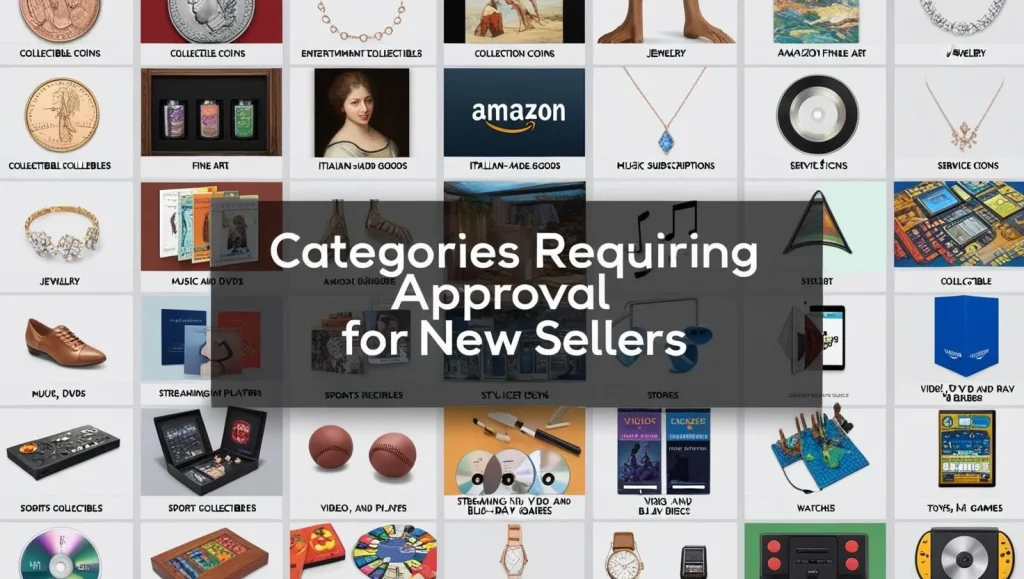
As of 2025, Amazon restricts access to several categories for new FBA sellers. You’ll need to apply for approval before listing products in these gated categories:
- Collectible Coins
- Entertainment Collectibles
- Fine Art
- Jewelry
- Amazon Subscription Boxes
- Made in Italy
- Music & DVD
- Services
- Sports Collectibles
- Streaming Media Players
- Video, DVD, & Blu-ray
- Watches
- Holiday Selling Requirements in Toys & Games
- Sony PlayStation products in Video Games
Each of these categories has specific requirements, and the approval process varies in difficulty. Some categories, like Toys & Games, have seasonal restrictions that apply during the holiday shopping season (typically October through December).
Restricted Products for Amazon FBA New Sellers
Beyond category restrictions, Amazon FBA new seller restrictions also apply to specific product types. These include:
- Alcohol
- Animals & Animal-Related Products
- Art (Fine Art and Home Decor)
- Automotive and Powersports items
- Composite Wood Products
- Cosmetics & Skin/Hair Care products
- Currency, Coins, Cash Equivalents, and Gift Cards
- Dietary Supplements
- Drugs & drug paraphernalia
- Electronics (certain types)
- Explosives, Weapons, and Related Items
- Food & Beverage items
- Hazardous and Dangerous Items
- Human Parts & Burial Artifacts
- Jewelry & Precious Gems
- Laser products
- Medical devices and accessories
- Pesticides and Pesticide Devices
- Tobacco & Tobacco-Related Products
Even within unrestricted categories, specific products may still require approval. Always check product limitations before investing in inventory.
How to Apply for Category Ungating
“Ungating” is the process of getting approval to sell in restricted categories. For Amazon FBA new seller restrictions, the ungating process typically involves:
- Login to Seller Central: Access your seller dashboard
- Navigate to Inventory: Select “Add A Product” from the inventory tab
- Search for a Product: Find a product in the category you want approval for
- Check Limitations: Click “Show limitations” to see if you can request approval
- Request Approval: Click the “Request Approval” button if available
- Submit Required Documentation: This typically includes:
- Invoices from legitimate suppliers (usually 3+ recent invoices)
- Images of the product (showing all sides, labels, expiration dates)
- Business licenses or certificates (category-specific)
- Letter of authorization (for brand-restricted items)
Amazon reviews these applications carefully, often taking 2-7 days to respond. The more competitive the category, the more stringent the approval process.
Brand Restrictions for New FBA Sellers
Beyond category restrictions, Amazon FBA new seller restrictions also apply to specific brands. These brand gating measures protect established brands from counterfeit sellers and unauthorized distributors.
Some heavily restricted brands include:
- Nike
- Adidas
- Apple
- Disney
- Sony
- Samsung
- Microsoft
- LEGO
To sell these brands’ products, you typically need to become an authorized reseller, which often requires:
- Direct relationship with the brand or authorized distributor
- Significant sales history on Amazon (often 3+ months)
- Low customer complaint rate
- Invoices directly from the brand or authorized distributors
For new sellers, focusing on lesser-known brands or unbranded products can be a more accessible starting point.
Condition Requirements and Limitations
Amazon FBA new seller restrictions also apply to product conditions in certain categories. These categories typically restrict used item sales:
- Baby Products
- Beauty
- Clothing, Accessories & Luggage
- Grocery & Gourmet Food
- Health & Personal Care
- Jewelry
- Shoes, Handbags & Sunglasses
- Watches
New sellers should focus on sourcing new items for these categories or explore different categories if they primarily deal with used merchandise.
Benefits of Selling in Restricted Categories
While Amazon FBA new seller restrictions may seem daunting, there are significant advantages to becoming approved in gated categories:
- Less Competition: Fewer sellers typically means less price competition
- Higher Profit Margins: Restricted categories often maintain better pricing
- Reduced Race to the Bottom: Less aggressive price cutting by competitors
- Perceived Quality: Customers often associate gated categories with higher quality
- Serious Seller Advantage: Less competition from casual or temporary sellers
According to recent surveys, approximately 7% of successful Amazon sellers operate in gated categories, demonstrating it’s possible to overcome Amazon FBA new seller restrictions with persistence.
Step-By-Step Ungating Process
To navigate Amazon FBA new seller restrictions successfully, follow this detailed ungating process:
- Build Account Health First:
- Maintain a perfect seller record for 3+ months
- Achieve Order Defect Rate below 1%
- Keep on-time delivery above 95%
- Respond to all customer messages within 24 hours
- Source Products Properly:
- Purchase directly from manufacturers or authorized distributors
- Obtain proper invoices (not retail receipts)
- Ensure invoices include your business name, supplier information, product details, and dates
- Order minimum quantities (typically 10 units)
- Prepare Documentation:
- Clear, readable PDFs of invoices
- High-quality product images
- Business license documentation
- Any required category-specific certifications
- Submit Application:
- Use the category approval request process in Seller Central
- Complete all fields accurately
- Upload all required documentation in one session
- Include detailed notes explaining your business model
- Follow Up:
- If rejected, carefully review the reason
- Address the specific issues mentioned
- Reapply with improved documentation
- Consider using Amazon’s ungating service providers if repeatedly rejected
Common Approval Rejection Reasons
Understanding why Amazon rejects ungating requests can help you overcome Amazon FBA new seller restrictions more effectively:
- Invoice Issues: Invoices must be from authorized distributors, not retail stores
- Quantity Problems: Some categories require a minimum purchase quantity
- Documentation Quality: Blurry or incomplete documentation gets rejected
- Insufficient Seller History: New accounts may need to build history first
- Mismatch Information: Business name on invoices must match your seller account
- Expired Documentation: Invoices typically must be less than 180 days old
- Missing Product Details: Ensure invoices clearly identify the exact products
Q&A About Amazon FBA New Seller Restrictions
Q: How long does a new Amazon FBA seller need to wait before applying for restricted categories?
A: While there’s no official waiting period, most successful applications come from sellers with at least 3 months of sales history and excellent account metrics. Building a solid foundation first increases your approval chances.
Q: Can I use retail receipts instead of wholesale invoices for category approval?
A: No, Amazon specifically requires wholesale invoices from manufacturers or authorized distributors, not retail receipts. Using retail receipts will result in automatic rejection.
Q: Are Amazon FBA new seller restrictions the same internationally?
A: No, restrictions vary by marketplace. What’s restricted in the US may not be in Europe or Japan, and vice versa. Always check the specific marketplace’s policies before expanding internationally.
Q: What’s the success rate for new sellers getting approved in restricted categories?
A: Success rates vary by category, but generally, about 30-50% of properly prepared applications are approved on the first attempt. The more competitive categories like Luxury Beauty have lower approval rates (10-20%).
Q: Do Amazon FBA new seller restrictions ever change?
A: Yes, Amazon regularly updates its policies. Categories that were once unrestricted may become gated, while others might be opened. Always check current requirements before ordering inventory.
Q: Is it worth using paid ungating services to overcome restrictions?
A: Results vary widely. Some legitimate services can help with the documentation and application process, but be wary of any service promising guaranteed approval, as this often involves questionable practices that could jeopardize your account.
Conclusion
While Amazon FBA new seller restrictions present challenges, they’re not insurmountable obstacles. Understanding these limitations before you begin can save considerable frustration and misdirected investment. Start with unrestricted categories to build your seller history, then gradually expand into more regulated areas as you establish your business.
Remember that these restrictions ultimately benefit serious sellers by reducing competition from less committed merchants. With proper preparation, documentation, and persistence, you can successfully navigate Amazon FBA new seller restrictions and build a thriving e-commerce business in 2025 and beyond.


