

If you’re selling on Amazon, you’ve probably heard about FBA and FBM. But which is better FBA or FBM? It really depends on your business needs and how much control you want. FBA, or Fulfillment by Amazon, lets Amazon handle storage and shipping for you. On the other hand, FBM, or Fulfilled by Merchant, means you take care of everything yourself. Each option has its pros and cons, and in this article, we’ll break them down so you can make an informed choice.
Key Takeaways
- FBA is great for sellers who want Amazon to handle logistics and customer service.
- FBM gives sellers more control over their inventory and shipping processes.
- Costs can vary significantly between FBA and FBM, impacting profitability.
- Sales performance often differs, with FBA typically having an edge in visibility.
- Choosing between FBA and FBM depends on your product type and sales volume.
Understanding FBA And FBM

So, you’re trying to figure out which is better FBA or FBM? It’s a common question for anyone selling on Amazon. Both Fulfillment by Amazon (FBA) and Fulfillment by Merchant (FBM) have their own set of advantages and disadvantages. Understanding the core differences is the first step in making the right choice for your business. Let’s break it down.
Definition Of FBA
FBA, or Fulfillment by Amazon, means you send your products to Amazon, and they take care of storing, packing, shipping, and even handling customer service for those orders. Think of it as outsourcing your entire logistics operation to Amazon. You focus on sourcing or creating products, and Amazon handles the rest. This can be a huge time-saver, especially if you’re dealing with a large volume of sales. Amazon has a vast network of warehouses and a well-oiled shipping machine, which can get your products to customers quickly and efficiently.
Definition Of FBM
FBM, or Fulfillment by Merchant, means you, the seller, are responsible for every aspect of fulfilling orders. This includes storing your inventory, packing the orders, shipping them out, and handling any customer service related to shipping or returns. It gives you more control, but it also means more work. You’re essentially running your own mini-fulfillment center. Some sellers prefer this because they want to maintain a personal touch or have very specific requirements for how their products are handled. If you are running sponsored ads and face a stockout situation, you will need to manage it yourself.
Key Differences Between FBA And FBM
The main differences boil down to control, cost, and convenience. Here’s a quick rundown:
- Fulfillment Responsibility: FBA handles storage, packing, shipping, and customer service. FBM requires you to manage all of these aspects yourself.
- Fees: FBA involves fees for storage, fulfillment, and other services. FBM costs depend on your own shipping rates, storage costs, and customer service expenses.
- Control: FBM gives you complete control over your inventory and the customer experience. FBA means you’re trusting Amazon to handle these things according to their standards.
- Amazon Prime Eligibility: FBA products are automatically eligible for Amazon Prime, which can significantly boost sales. FBM sellers need to meet certain requirements to offer Prime shipping.
- Scalability: FBA is generally more scalable, as Amazon can handle a large volume of orders. FBM can be more challenging to scale, as you’re limited by your own resources.
Choosing between FBA and FBM depends on your business model, your products, and your priorities. There’s no one-size-fits-all answer. Consider what aspects of your business you want to control and what you’re willing to outsource. Also, think about your budget and how much time you have to dedicate to fulfillment.
Advantages Of Using FBA
Access To Amazon Prime Customers
One of the biggest perks of using FBA is tapping into Amazon’s massive Prime customer base. Prime members often get perks like free and fast shipping, and they’re usually more willing to buy products that qualify for Prime. It’s a huge market segment you don’t want to miss out on. Think about it:
- Increased visibility in search results.
- Higher conversion rates due to Prime badge.
- Access to a loyal customer base.
Simplified Logistics Management
Let’s be real, dealing with logistics can be a pain. With FBA, Amazon takes care of a lot of that for you. They handle storage, packing, shipping, and even customer service related to shipping. This can free up a ton of your time to focus on other important stuff, like product development or marketing. It’s like having a whole team dedicated to fulfillment without actually hiring anyone.
Customer Service Handling
Customer service can be a real time-sink. With FBA, Amazon handles a lot of the basic customer service inquiries, especially those related to shipping and returns. This can save you a lot of headaches and free up your time to focus on other aspects of your business. Plus, Amazon has a pretty good reputation for customer service, so you can be confident that your customers are in good hands.
Using FBA can really streamline your business. It’s not always the cheapest option, but the time and effort you save can be well worth the cost. It’s all about figuring out what makes the most sense for your specific business and products.
Benefits Of Choosing FBM

Fulfillment by Merchant (FBM) isn’t always the underdog. There are definitely situations where it shines. It really comes down to what you’re selling and how you want to run your business. Let’s look at some of the advantages.
Greater Control Over Inventory
With FBM, you’re the boss of your inventory. You know exactly what you have, where it is, and its condition. No surprises. This is super important if you’re selling something delicate, or something that needs special handling. You also avoid potential issues with supply chain verification that could tie up your inventory in Amazon’s warehouses. You can also manage your stock across multiple sales channels more easily.
Lower Fees And Costs
One of the biggest draws of FBM is often the potential for lower costs. You’re not paying FBA storage fees, fulfillment fees, or other charges. This can be a huge advantage, especially if you’re selling items with low profit margins or items that don’t move super quickly. Of course, you’ll still have shipping costs, but you have more control over those, too.
Flexibility In Shipping Options
FBM gives you the freedom to choose how you ship your products. Want to use a specific carrier? Need to offer expedited shipping? No problem. You can tailor your shipping options to meet your customers’ needs and your own budget. Plus, you can handle returns and exchanges exactly how you want, offering a more personalized experience.
FBM allows you to build a direct relationship with your customers. This can lead to increased loyalty and repeat business. You can include personalized notes, special offers, or other touches that make your brand stand out.
Cost Comparison Between FBA And FBM
FBA Fees Breakdown
Okay, let’s talk money. With FBA, you’re looking at a few different kinds of fees. There’s the fulfillment fee, which covers picking, packing, and shipping your products. Then you’ve got storage fees, which depend on how much space your stuff takes up in Amazon’s warehouses and the time of year. Storage fees usually go up during the holiday season. Don’t forget about other potential costs like returns processing and unplanned service fees if something goes wrong with your inventory.
FBM Cost Considerations
FBM might seem cheaper at first glance, but you need to factor in all your costs. Think about the price of packaging materials, shipping labels, and the actual shipping costs, which can vary wildly depending on the carrier and delivery speed. You’ll also need to consider the cost of your own storage space, whether that’s a spare room or a dedicated warehouse. And, of course, your time is money – how much is it worth to you to handle all the shipping products yourself?
Long-Term Financial Implications
In the long run, the best choice depends on your business model. FBA can be great for high-volume sellers who want to offload logistics, even with the fees. FBM might be better for smaller operations or those selling unique items where personalized service is key. Consider how each model affects your cash flow, profit margins, and potential for growth. It’s not just about the immediate costs; it’s about the overall impact on your business. To figure out what fulfillment approaches could be profitable for your business, start by doing research to decide what price points to set for the products you want to sell. Then you can calculate your expenses and estimate sales to see if you’ll be able to turn a profit and maintain healthy margins.
Choosing between FBA and FBM isn’t just about the numbers. It’s about how you want to run your business. Do you want to be hands-on with every order, or do you prefer to let Amazon handle the heavy lifting? Your answer to that question will heavily influence which model makes the most financial sense for you.
Performance Metrics For FBA And FBM
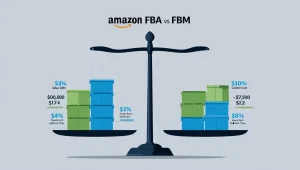
Okay, so how do you actually know which method, FBA or FBM, is working better for your business? It all comes down to the numbers. Let’s break down the key performance indicators (KPIs) you should be tracking.
Sales Velocity Comparison
Sales velocity is a big one. Are your products moving faster with FBA or FBM? Generally, FBA products see a boost in sales velocity because of Amazon Prime eligibility and Amazon’s algorithm favoring FBA listings. But that’s not always the case. If you’re selling something super niche, or if you’ve built a strong brand following that prefers buying directly from you, FBM might hold its own.
Consider these factors when comparing:
- Listing visibility (search ranking)
- Conversion rates (percentage of views that turn into sales)
- Average order value
Customer Satisfaction Ratings
Happy customers mean repeat business. Are you getting better reviews and ratings with FBA or FBM? FBA often leads to higher satisfaction because Amazon handles the shipping and customer service, which can be a real headache. However, if you pride yourself on providing personalized customer service, FBM might give you an edge.
Here’s what to look at:
- Product review scores
- Customer feedback on shipping speed and packaging
- Responsiveness to customer inquiries
Return Rates Analysis
Returns are a fact of life in e-commerce, but high return rates can kill your profits. Which fulfillment method leads to fewer returns? FBA might have lower return rates due to Amazon’s efficient handling and standardized packaging. But if your products require special handling or have complex instructions, your own FBM process might be better. Reviewing metrics to improve performance is key.
It’s important to remember that these metrics don’t exist in a vacuum. You need to consider them together, along with your costs and business goals, to make the right decision for your products.
Ideal Scenarios For FBA
High Volume Sales
When you’re moving a lot of product, FBA can really shine. Think about it: you’re not stuck packing boxes all day. Amazon handles the storage, picking, packing, and shipping. This is especially useful if you’re dealing with a large number of orders daily. It frees up your time to focus on marketing and product development, instead of getting bogged down in logistics. Plus, Amazon’s infrastructure is built to handle scale, so you’re less likely to run into fulfillment bottlenecks as your sales increase.
Product Types Suited For FBA
Certain products are just a better fit for FBA. Lightweight, durable items that are easy to store and ship are ideal. Think things like phone cases, small electronics accessories, or even certain types of clothing. Fragile or bulky items can still work with FBA, but you’ll need to factor in the extra costs for packaging and handling. Also, consider the shelf life of your products. If you’re selling something that expires quickly, FBA might not be the best choice, as you could end up with unsold inventory and storage fees. To avoid the FBA aged inventory surcharge, consider auto-replenishment.
Seasonal Demand Considerations
FBA is a great option if your products experience seasonal spikes in demand. For example, if you sell holiday decorations, Halloween costumes, or back-to-school supplies, FBA can help you manage the increased order volume without having to scramble for extra warehouse space or staff. Just make sure you plan ahead and get your inventory to Amazon’s warehouses well in advance of the peak season. This ensures that your products are available when customers are ready to buy.
Using FBA during peak seasons can be a game-changer. It allows you to capitalize on increased demand without being overwhelmed by fulfillment challenges. However, it’s important to carefully forecast your inventory needs to avoid stockouts or excessive storage fees.
Here’s a quick look at how FBA can help during seasonal peaks:
- Handles increased order volume efficiently.
- Provides access to Amazon’s vast fulfillment network.
- Reduces the risk of shipping delays.
- Frees up your time to focus on marketing and promotions.
When To Opt For FBM
Fulfillment by Merchant (FBM) isn’t always the underdog. There are definitely situations where handling your own fulfillment makes more sense than letting Amazon take the reins. It really boils down to the specifics of your business and what you’re selling. Let’s explore some scenarios where FBM shines.
Niche Products
If you’re dealing with niche products that have a very specific audience, FBM can be a great choice. These are items that might not move in huge quantities but have a dedicated customer base. Think handmade goods, specialty parts, or items with unique customization options. With niche products, you often have a better understanding of your customer base and can cater to their needs more effectively than Amazon might.
Low Volume Sales
For sellers with low sales volume, the fees associated with FBA can eat into profits significantly. If you’re only selling a handful of items each month, it might be more cost-effective to handle the storage and shipping yourself. This way, you avoid those pesky storage fees and only pay for shipping when an item actually sells. Plus, you maintain direct control over your inventory.
Personalized Customer Service Needs
One of the biggest advantages of FBM is the ability to offer personalized customer service. If your products require special handling, assembly, or come with unique instructions, you can provide a level of support that FBA simply can’t match. This can lead to happier customers and better reviews, which is always a win.
FBM allows for a more hands-on approach to customer interactions. You can directly address concerns, offer tailored solutions, and build stronger relationships with your buyers. This is especially important if your products are complex or require a high degree of customer education.
Final Thoughts on FBA vs FBM
In the end, choosing between FBA and FBM really comes down to what works best for you and your business. If you want to save time and let Amazon handle the heavy lifting, FBA might be the way to go. But if you prefer to keep things in your hands and save on fees, FBM could be a better fit. Each method has its own pros and cons, and what works for one seller might not work for another. So, take a good look at your products, your budget, and how much control you want over your shipping. Whichever path you choose, just make sure it aligns with your goals.
Frequently Asked Questions
What is FBA?
FBA stands for Fulfillment by Amazon. It’s a service where sellers send their products to Amazon, and Amazon takes care of storing, packing, and shipping them to customers.
What is FBM?
FBM means Fulfilled by Merchant. In this case, the seller is responsible for storing, packing, and shipping their products directly to customers.
What are the main differences between FBA and FBM?
The main difference is who handles the storage and shipping. FBA lets Amazon do it for you, while FBM means you do it yourself.
What are the benefits of using FBA?
Using FBA can give you access to Amazon Prime customers, make shipping easier for you, and Amazon also handles customer service.
Why would someone choose FBM over FBA?
Some sellers prefer FBM because it gives them more control over their inventory, usually costs less, and allows for flexible shipping options.
Which option is better for small businesses?
It depends on the business. FBA is great for larger sales volumes, while FBM might be better for niche products or sellers who want to manage everything themselves.


