

If you’re thinking about selling on Amazon, you’ve probably heard about the Amazon referral fee. But what is it exactly? In simple terms, it’s a fee Amazon charges sellers for using its platform to sell products. This fee can affect your pricing and overall profit margins, so understanding it is crucial for anyone looking to make money on Amazon. Let’s break it down further to see how it works and what you need to know as a seller.
Key Takeaways
- The Amazon referral fee is a percentage of the sale price for each item sold on the platform.
- It varies by product category, with rates typically ranging from 6% to 45%.
- Sellers should consider this fee when setting prices to avoid losses.
- Amazon’s referral fees contribute significantly to its revenue model, supporting its operations and customer services.
- Understanding and managing referral fees can help sellers maximize their profits on Amazon.
Understanding The Amazon Referral Fee

Definition of Amazon Referral Fee
So, what is amazon referral fee? It’s basically a commission that Amazon charges sellers for each item sold on their platform. Think of it as a finder’s fee for connecting you with customers. The referral fee is calculated as a percentage of the sale price, and this percentage can vary depending on the product category. It’s a key part of understanding your costs when selling on Amazon.
Importance of Referral Fees for Sellers
Referral fees are important for sellers because they directly impact profitability. You need to factor these fees into your pricing strategy to ensure you’re making a profit. Ignoring them can lead to underpricing your products and losing money on sales. It’s all about understanding your total selling costs, and referral fees are a big part of that. You can use a fee calculator to help you with this.
How Referral Fees Impact Pricing Strategies
Referral fees play a significant role in how you price your products on Amazon. Since the fee is a percentage of the sale price, it directly affects your profit margin. You need to carefully consider the referral fee percentage for your product category when setting your prices. If the referral fee is high, you might need to increase your prices to maintain a healthy profit margin. It’s a balancing act between attracting customers with competitive prices and ensuring you’re making enough money to sustain your business.
Understanding how referral fees work is crucial for any Amazon seller. It allows you to make informed decisions about pricing, product selection, and overall business strategy. By carefully managing these fees, you can maximize your profits and achieve long-term success on the Amazon platform.
Components Of The Amazon Referral Fee
Item Price and Additional Charges
When you’re selling on Amazon, the item price is just the starting point. The referral fee is calculated on the total sales price, which includes the item price, any shipping charges paid by the buyer, and any gift wrap charges. So, if you offer gift wrapping, remember that adds to the base for the referral fee calculation. It’s not just the cost of the product itself.
Variable Closing Fee Explained
This is where things get a little more nuanced. The variable closing fee applies specifically to media items (books, music, DVDs, video games, and software). It’s an additional fee on top of the referral fee. It’s usually a small amount, but it’s something you absolutely need to factor in if you’re dealing with these product categories. It’s not a percentage; it’s a flat fee. Keep an eye on Amazon’s referral fee schedule for the most up-to-date numbers.
Minimum Referral Fee Policy
Even if the standard referral fee percentage calculates to a very small amount, Amazon has a minimum referral fee. This means that regardless of how inexpensive your product is, you’ll still pay at least this minimum fee. It’s designed to ensure Amazon gets a certain return even on low-priced items. This is especially important for sellers dealing in inexpensive goods. Always check the current minimum referral fee to make sure your pricing accounts for it.
It’s easy to overlook these components when you’re first starting out, but understanding them is key to accurately pricing your products and maintaining healthy profit margins. Don’t just look at the item price; consider all the elements that contribute to the final fee calculation.
Calculating The Amazon Referral Fee
Determining the Referral Fee Percentage
Okay, so you want to figure out how much Amazon is going to take from each sale? The first thing you need to do is figure out the referral fee percentage. Amazon doesn’t charge a flat rate across the board; it varies depending on what you’re selling. Most categories have a 15% referral fee, but some are lower, and others are much higher. You’ll need to know your product category to find the right percentage.
Using Amazon’s Fee Schedule
Amazon has a fee schedule that lists all the different categories and their corresponding referral fees. It’s a bit of a pain to navigate, but it’s the only way to know for sure what you’ll be charged. Make sure you’re looking at the most up-to-date version, as these things can change. You can usually find it in the Amazon Seller Central help pages. Once you find your category, note the percentage. This is what you’ll use to calculate the fee.
Example Calculations for Different Products
Let’s run through a few examples to make this clearer. Say you’re selling a book for $20, and the referral fee for books is 15%. The referral fee would be $20 * 0.15 = $3.00. Now, imagine you’re selling electronics, and the referral fee is 8%. If you sell a gadget for $100, the referral fee would be $100 * 0.08 = $8.00. Remember, these are just examples, and the actual Amazon referral fee can vary. Also, don’t forget about other fees, like fulfillment fees if you’re using FBA. It’s easy to forget about those and end up with smaller margins than you expected.
It’s important to remember that the referral fee is calculated on the total sales price, which includes the item price plus any shipping or gift-wrapping charges. So, if you’re offering free shipping, that won’t affect the referral fee, but if you’re charging for it, that amount will be included in the calculation.
Here’s a quick table to illustrate:
| Product Category | Sale Price | Referral Fee Percentage | Referral Fee |
| Books | $20 | 15% | $3.00 |
| Electronics | $100 | 8% | $8.00 |
| Clothing | $50 | 17% | $8.50 |
Keep in mind that selling on Amazon involves more than just referral fees; there are also potential variable closing fees to consider.
Amazon Referral Fee Rates By Product Category
Standard Rates for Common Categories
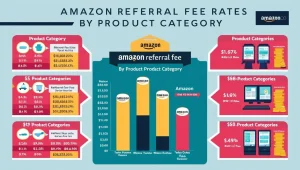
As an Amazon seller, it’s super important to know the referral rates for different product categories. These fees can change quite a bit, and knowing what to expect helps you make smart choices about pricing and what to sell. Referral fees are a percentage of the total sales price, not including taxes or shipping. These fees help Amazon cover costs like promoting products, handling sales, and keeping the platform running smoothly. For example, you might find standard rates around 15% for many common categories.
Higher Rates for Specialty Items
Some product categories have higher referral fees than others. For example, jewelry often has a higher rate, sometimes around 20%. Watches might have a rate of 16%. It really depends on the category. It’s worth checking the Amazon fee schedule to see the exact rates for the items you’re selling. Knowing these variations is key to pricing your products correctly and making a profit.
Exceptions and Variations in Fees
Amazon’s referral fees aren’t always straightforward. There can be exceptions and variations depending on a few things. For instance, items priced over $1,000 might have lower referral fees, while those under $1 could have higher ones. Also, Amazon sometimes runs promotions or changes its fee structure, so it’s a good idea to keep an eye on the latest updates. Here are a few examples of referral rates for specific categories:
- Personal Computers: Around 6%
- Video Games: 15% (but consoles might be 8%)
- Amazon Devices: Can vary widely, from 6% to 45% depending on the device
Keeping up with these changes can be a bit of a hassle, but it’s important for managing your costs and staying competitive on Amazon. Make sure you check Amazon’s official resources regularly to stay informed.
The Role Of Referral Fees In Amazon’s Business Model
Revenue Generation from Third-Party Sellers
Amazon’s business model relies heavily on revenue from third-party sellers, and referral fees are a significant component of this. These fees provide a steady income stream for Amazon, allowing them to maintain and improve their platform. Think of it like this: Amazon provides the marketplace, and sellers pay a commission for each sale made through that marketplace. In 2022, Amazon generated $117.716 billion in third-party seller services revenue, which includes Amazon’s referral fee. That’s a big chunk of change!
Impact on Seller Participation
Referral fees can influence seller behavior. While they represent a cost for sellers, they also incentivize participation on the Amazon platform. By charging a percentage of each sale, Amazon can attract a wide range of sellers, which increases the variety of products available to customers. This creates a more attractive shopping experience, which in turn benefits Amazon. It’s a balancing act – fees need to be high enough to generate revenue for Amazon, but not so high that they discourage sellers from using the platform. It’s important to understand how transparent referral fees work.
Enhancing Customer Experience Through Product Variety
Referral fees play a role in enhancing the customer experience. The revenue generated from these fees allows Amazon to invest in improving its platform, expanding its product selection, and providing better customer service. A wider product selection means customers are more likely to find what they’re looking for, leading to increased customer satisfaction and loyalty. It’s all part of Amazon’s flywheel effect, where different parts of the business feed into each other to drive growth. More sellers mean more products, which attracts more customers, which leads to more sales and referral fees.
Amazon’s business model is designed to create a win-win situation. Sellers gain access to a massive customer base, and Amazon earns revenue through referral fees. This revenue is then reinvested into the platform to improve the customer experience, which in turn attracts more sellers and customers. It’s a cycle that drives growth and innovation.
Here’s a simple breakdown of how referral fees contribute to Amazon’s business model:
- Referral fees generate revenue for Amazon.
- This revenue is used to improve the platform and customer experience.
- A better platform attracts more sellers and customers.
- More sellers and customers lead to more sales and referral fees.
Managing Referral Fees To Maximize Profit
Strategies for Pricing Products
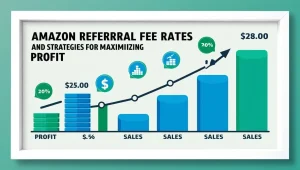
Okay, so you’re selling on Amazon, and those referral fees are eating into your profits. What can you do? First, really think about your pricing. Your pricing strategy is key to absorbing referral fees without scaring away customers. Don’t just guess; do the math. Factor in the referral fee percentage for your product category before you set your price. Check out what your competitors are doing, but don’t just blindly follow them. Make sure your numbers work.
Utilizing Amazon’s Fee Calculator
Amazon has a fee calculator that’s actually pretty useful. It lets you plug in your product’s price and see how much you’ll pay in referral fees, FBA fees, and other costs. Use it! It’s way better than trying to do all this in your head or on a spreadsheet. Play around with different price points to see how they affect your profit margin. It’s a simple way to see how Amazon referral fees affect your bottom line.
Understanding Total Selling Costs
It’s easy to focus just on the referral fee, but that’s not the whole story. You’ve got to look at all your selling costs. This includes:
- The cost of your product
- Shipping costs (both to Amazon and to the customer)
- FBA fees (if you’re using FBA)
- Storage fees
- Advertising costs
Once you know your total costs, you can figure out your break-even point and set your prices accordingly. Don’t forget to factor in a profit margin! You’re in this to make money, right? If you don’t account for all the costs, you might end up losing money without even realizing it. It’s a common mistake, so be careful.
Benefits And Drawbacks Of Amazon Referral Fees
Advantages for Sellers Using Amazon
Selling on Amazon comes with a lot of perks, even with the referral fees. The biggest advantage is access to Amazon’s massive customer base. Think about it: millions of potential buyers are already browsing the site every day. You’re basically getting built-in marketing just by listing your products there. Plus, Amazon handles a lot of the heavy lifting, like payment processing and, in many cases, even shipping if you use Fulfillment by Amazon (FBA). This can free up your time to focus on other aspects of your business, like product development or sourcing.
- Huge customer base
- Built-in marketing
- Streamlined logistics (with FBA)
Challenges Faced by Small Businesses
For small businesses, those referral fees can really sting. When you’re operating on tight margins, every percentage point counts. It can be tough to compete with larger sellers who can absorb those fees more easily. Plus, it’s easy to get lost in the crowd on Amazon. With so many sellers offering similar products, it can be hard to stand out and attract customers without spending even more money on advertising. It’s a balancing act, trying to stay competitive while still making a profit.
- Tight profit margins
- Increased competition
- Advertising costs
Long-Term Implications for Profit Margins
Over time, Amazon referral fees can really eat into your profit margins. It’s something you need to keep a close eye on. As Amazon’s fees increase, sellers need to adapt. This might mean raising prices, finding ways to cut costs, or even exploring alternative sales channels. It’s all about staying agile and being willing to adjust your strategy as the landscape changes. Careful planning is key.
It’s important to regularly review your pricing and cost structure to make sure you’re still making a healthy profit. Don’t be afraid to experiment with different strategies to see what works best for your business. The E-commerce world is always evolving, so you need to be prepared to adapt.
Wrapping It Up
In conclusion, understanding Amazon’s referral fee is key for anyone looking to sell on the platform. This fee, which is a percentage of the sale price, can vary based on the product category. While it might seem like a lot at first glance, it’s important to remember that this fee helps cover the costs of marketing and maintaining the platform that brings customers to your products. Sellers need to factor this into their pricing to avoid losing money. Ultimately, while the referral fee is a cost, it also opens the door to a massive customer base, which can lead to significant sales if managed well.
Frequently Asked Questions
What is the Amazon referral fee?
The Amazon referral fee is a charge that Amazon takes from sellers for every product sold on its site. It is usually a percentage of the sale price and varies by product type.
How is the referral fee calculated?
The referral fee is calculated by taking a percentage of the item’s sale price. For example, if an item sells for $100 and the referral fee is 15%, the fee would be $15.
Are there minimum referral fees?
Yes, Amazon has a minimum referral fee. If the calculated fee is less than $0.30, sellers will still pay a minimum of $0.30.
Why does Amazon charge referral fees?
Amazon charges referral fees to cover costs for marketing, advertising, and managing the platform. This fee helps Amazon provide a large customer base for sellers.
Do all sellers pay referral fees?
Yes, all sellers on Amazon, whether they have an individual or professional account, must pay referral fees on their sales.
How can sellers manage referral fees effectively?
Sellers can manage referral fees by factoring them into their pricing strategies, using Amazon’s fee calculator, and understanding their total selling costs.


